Materials

On this page
Why freeze-thaw drives the choice Concrete pavers Natural stone Pressure-treated wood Side-by-side summary ReferencesWhy freeze-thaw drives the choice
In a climate that crosses 0 °C repeatedly, the deciding factor for a patio surface is how it copes with water that freezes and expands. Material that absorbs water and has nowhere to drain is the most likely to crack, spall, or heave. For that reason, the base and drainage under a surface often matter more than the surface itself.
Two principles apply to every option below: build on a compacted granular base so meltwater drains away rather than pooling, and give the surface a slight slope away from the house. With those in place, the choice between materials comes down to appearance, budget, and how much maintenance you want to take on.
Concrete pavers
Interlocking concrete pavers are a common choice for Canadian patios because individual units can move slightly with the ground and be lifted and reset if a section settles. They are laid on a compacted base topped with bedding sand, with joint sand swept between them.
- Strengths: repairable unit by unit, wide range of finishes, forgiving of minor frost movement.
- Watch for: joint sand washing out over time; re-sanding is part of normal upkeep.
- Upkeep: occasional re-sanding and weed control in the joints.
Natural stone
Natural stone such as flagstone gives a patio a distinct, irregular character. Denser, less porous stone generally handles freeze-thaw better than soft, absorbent stone, so the specific type matters. It can be set on a mortar bed over a concrete slab or laid dry on a granular base like pavers.
- Strengths: long-lasting appearance, each piece unique.
- Watch for: porous stone can absorb water and suffer in repeated freezes; confirm suitability for your region.
- Upkeep: sealing some stone types; keeping joints clear of debris.
When comparing stone, ask the supplier how the material performs under repeated freezing rather than relying on appearance alone. Suitability varies widely between stone types.
Pressure-treated wood
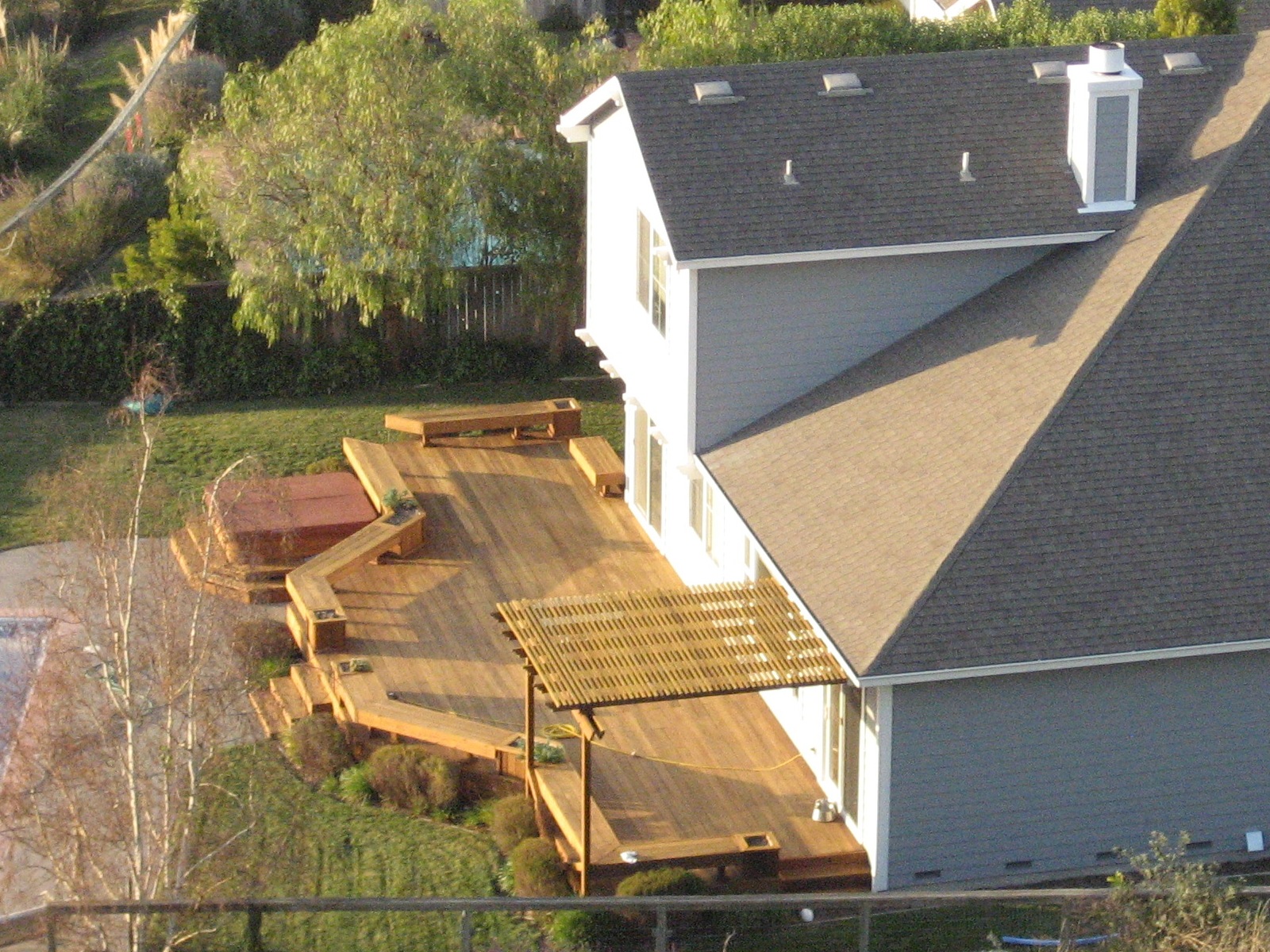
A raised wood deck is an alternative to a ground-level hard surface, and is often used where the ground slopes or sits well below the door. Pressure-treated lumber is treated to resist rot and insects, which suits the damp conditions of spring thaw and autumn rain. The Canadian Wood Council publishes general guidance on wood construction and the use of treated lumber outdoors.
- Strengths: works on uneven or sloped ground, warmer underfoot than stone or concrete.
- Watch for: fasteners and connectors need to be rated for treated lumber; finishes wear and need renewal.
- Upkeep: periodic cleaning and re-coating; checking fasteners and boards each spring.
Side-by-side summary
- Concrete pavers
- Repairable, forgiving of movement, moderate upkeep through joint re-sanding.
- Natural stone
- Durable and distinctive when a low-porosity type is chosen; confirm freeze suitability.
- Pressure-treated wood
- Best for slopes and raised access; needs corrosion-rated hardware and periodic refinishing.
The right answer depends on the layout you settled on first. If you have not planned the zones yet, start with layout and zoning for Canadian patios, then return here to choose a surface, and see seasonal arrangement for terraces for upkeep timing.